
Self-service CI/CD pipeline for database deployments with Liquibase & Azure DevOps
How an Oracle team moved from manual releases to gated, automated Liquibase pipelines in Azure DevOps.
Database changes moved through manual processes, isolated from CI/CD, so releases were slow and risky.
A self-service Azure DevOps pipeline that validates, previews, and promotes changes with Liquibase.
Changes reach Dev in minutes, production releases are gated by approvals, and every change is traceable.
Oracle · Liquibase · Azure DevOps
Problem
I recently worked with a customer who struggled to promote database changes to production quickly and safely. Their changes often remained locked in manual processes, isolated from modern CI/CD practices.
Impact
This gap caused:
- Delays in delivering new features
- Increased risk of human error in production deployments
- A disconnect between dev and ops teams
Solution
Here's a better way - something secure, automated, and developer-friendly. I developed an Azure DevOps CI/CD pipeline for database deployments that:
- Validates database changes using Liquibase
- Automates deployments to Dev, Staging, and Production
- Enforces approval gates and rollback previews
- Promotes changes safely to production
- Requires no DBA intervention for routine changes
Validate and package once, then promote the same artifact
CI pipeline: validate and package
- Validate changelog
- Show pending changes
- Generate SQL preview
- Generate rollback SQL
- Deploy to Dev
- Tag database
- Generate build metadata
- Build artifacts
- Publish artifact
changelog.xml/scripts/*.sqlupdate-preview.sqlrollback-preview.sqlversion.txtliquibase.properties(optional)
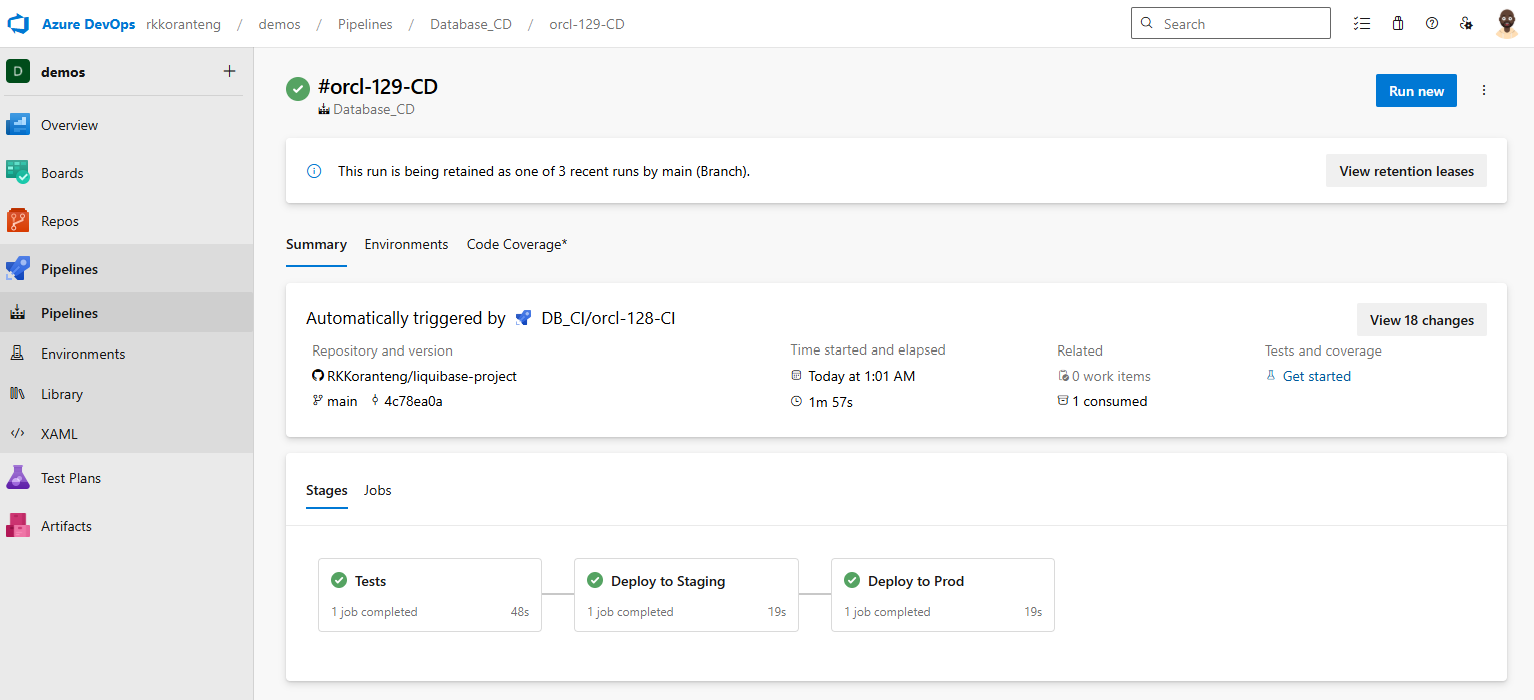
CD pipeline: test and promote to production
- Triggered by CI
- Downloads CI artifact
- Deploys to staging and production using the changelog
- References version and tag for auditing
Outcome
Implementing this solution allows:
- Developers to commit database changes and see them deployed to Dev within minutes
- Promotion to Production is fully automated but gated for approvals
- Dev and Ops teams have visibility and traceability of every change
- DBAs are no longer bottlenecks - we're enablers of innovation
- The business can respond faster to customer needs and market changes
Summary
By automating database deployments through a self-service CI/CD pipeline, developers are empowered to safely deliver changes without waiting on manual DBA intervention. This accelerates release cycles, reduces downtime, and improves team productivity, leading to faster time-to-market.